Why Cricket Whites Became Part of Test Match Dress
Why cricket whites became part of Test match dress: trace how long-form custom, practical layers, and a recognizable shared appearance shaped the tradition.
The common mistake is to treat cricket whites as a uniform invented for Test matches. That shortcut obscures a gradual history: white dress became associated with formal, long-form cricket through changing clothing habits and repeated convention, rather than one known founding rule.
Why cricket whites became part of Test match dress is best answered as a history of association, not a single decision. Clothing came to distinguish one setting for cricket from others, while giving players a shared appearance. The white shirt and trousers may look simple from the stands; their meaning has accumulated over time.
Before the uniform
Cricket did not begin with a universal kit rule. In earlier forms of the game, players wore clothing shaped by local custom, means, and occasion. As organized clubs and representative matches developed, dress could mark affiliation: a team’s appearance helped spectators recognize its members.
White clothing became prominent in formal cricket over time, but the precise path is difficult to reduce to a single cause or date. It is safer to describe the association as one formed through custom than to claim that a particular institution deliberately created the color convention. Cricket’s leading institutions, especially in Britain, cultivated ideals of orderly conduct and gentlemanly play; white dress came to sit comfortably within that image. This does not establish that those ideals alone produced the clothing custom. Nor should the image obscure the fact that access to clubs and authority over their customs were not evenly shared.
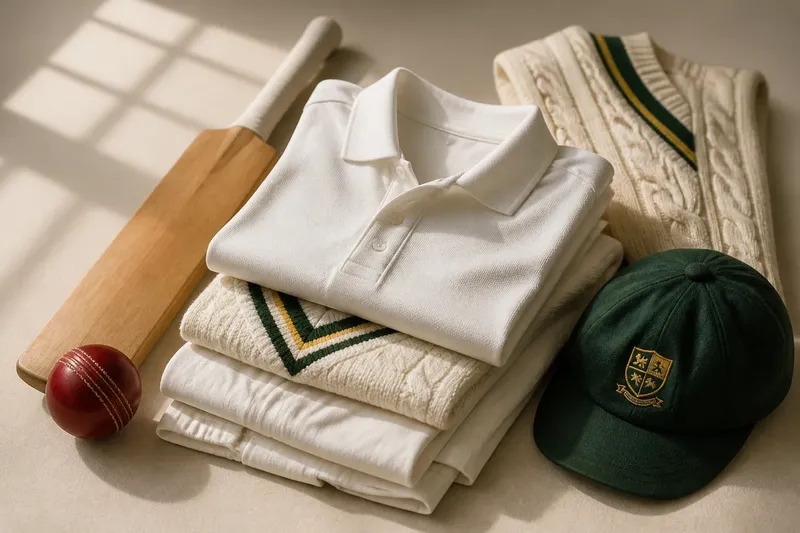
The broad impression of pale, matching clothing persisted as shirts, trousers, sweaters, and caps changed in cut and material. The familiar look is a tradition assembled from repeated choices, not a costume preserved unchanged.
Long-form convention
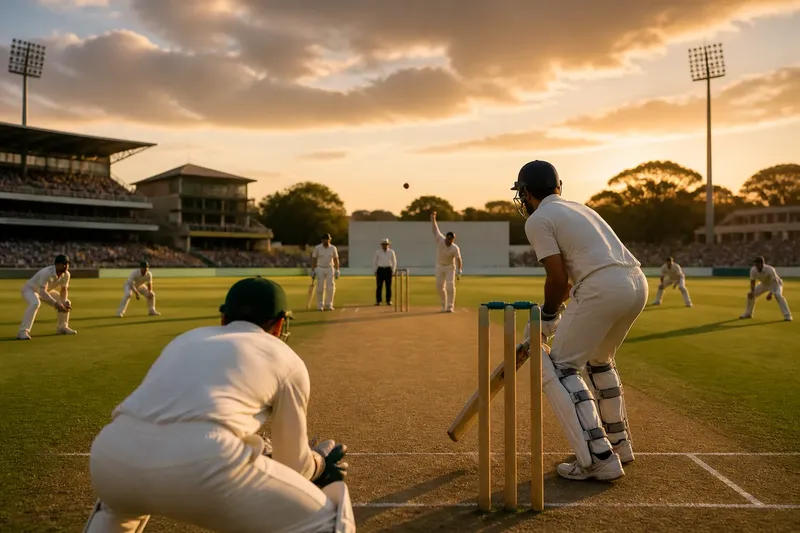
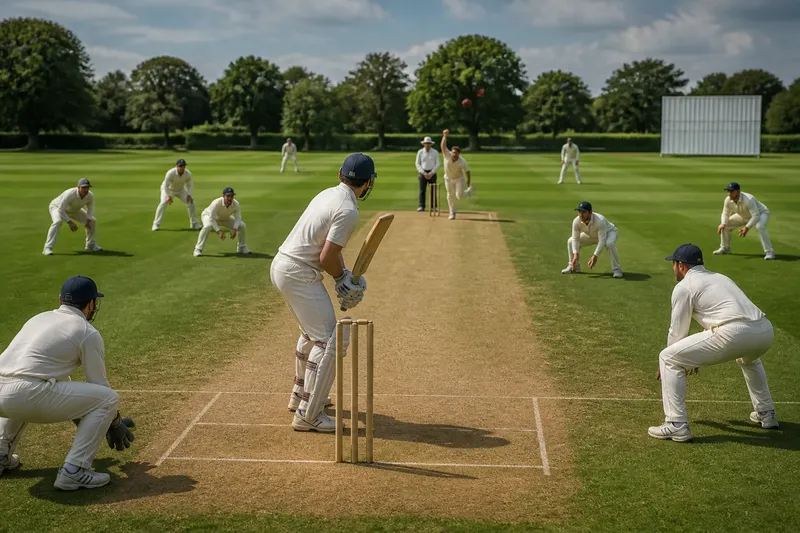
Long-form cricket keeps players in view through extended passages of play and changing conditions. A consistent dress code gives a match visual continuity. Against a green outfield, white clothing also makes players easy to distinguish, though visibility alone cannot explain why the custom endured.
Traditional whites help distinguish long-form cricket from limited-overs contests, where colored clothing became part of the presentation. Dress can serve as a quick visual cue, but it does not create the differences between formats. Rules, match length, and competition context do that work.
There is a practical side to the clothing as well. Light-colored garments and layers such as sweaters or long sleeves can suit some conditions, though comfort depends on the material, fit, and weather. Players should follow garment care instructions and the rules of their competition.
Meaning and memory
Whites have acquired associations with patience and restraint, qualities often linked to the rhythms of a long match. Clothing cannot make a player patient, but repeated use has made the color part of how people describe Test cricket.
The effect is like matching chairs around a table: they do not make a conversation fair or thoughtful, but they help establish a shared setting. In cricket, whites give players, officials, and spectators a recognizable visual convention. A match is more than individual performances; it is also an occasion shaped by inherited customs.
That custom does not mean the same thing to everyone. Some followers see a connection to club tradition and older forms of the game. Others notice its association with institutions that historically restricted participation. Both readings can coexist. Understanding the dress does not require treating its history as either pure romance or pure exclusion.
Questions about whites?
Are whites required in every cricket match?
No. Clothing depends on the format and competition. Colored kits are common in many shorter forms, while whites are strongly associated with traditional long-form cricket; local leagues and tournaments set their own rules.
Did Test cricket invent white clothing?
There is no single Test match or founding rule known to have established the custom. White dress developed through wider cricketing habits and conventions before becoming closely identified with the longest international format.
Do whites improve performance?
Their association with cricket is primarily cultural and historical, not a claim that white clothing improves play. Comfort and suitability depend on the garment and the conditions.
Why do players wear sweaters?
Sweaters are one traditional layer, used when warmth is needed. Their design and use vary, and they contribute to the familiar appearance of long-form cricket.
Reading the dress code
For a new spectator, clothing can help orient attention without substituting for an understanding of play. Notice the pale palette against the changing field, and how a sweater, cap, or badge adds individual detail within a shared look. Uniformity is broad, not absolute.
Say you are watching a long match for the first time and see one side in white while another contest on television uses bright colors. The useful inference is not that one game is more serious or authentic. The contrast signals different traditions and formats; the rules and rhythm of each match still need to be understood on their own.
Clubs and schools may adapt whites with a colored cap, sweater trim, or badge. Such details express local belonging without displacing the broader convention. The clothing links players to a wider tradition while leaving room for a team’s own identity.
A living convention
Cricket whites endure as both practical clothing and visual shorthand. They make long-form cricket recognizable and connect a present match with inherited customs. Their meaning is not fixed: the same outfit may suggest affection, formality, or exclusion, depending on who wears it and who watches.
The association between whites and Test cricket is not a natural property of the format. It formed through choices and repetition until the dress seemed inseparable from the game. When players walk out, their clothing signals a tradition; the people on the field and the conditions of the match give that tradition its living shape.